
This is a Canada Summer Jobs Position, the successful applicant will be 15-30 years old, however does not need to be returning to school. The position is 30 hours per week, with some weekend work. The position is available currently through the end of August.
The position will be scaled and modified in complexity to meet the age, skills and experience of the successful applicant.
The hourly rate is $22 to $24 per hour depending on skills and experience.
If you are interested, please reach out to worktodo@bridgerivervalley.ca and submit a resume or ask to speak to someone.
Tasks and Responsibilities
As a Groundskeeper, the successful applicant will play a key role in maintaining the beauty, safety, and accessibility of important community spaces.
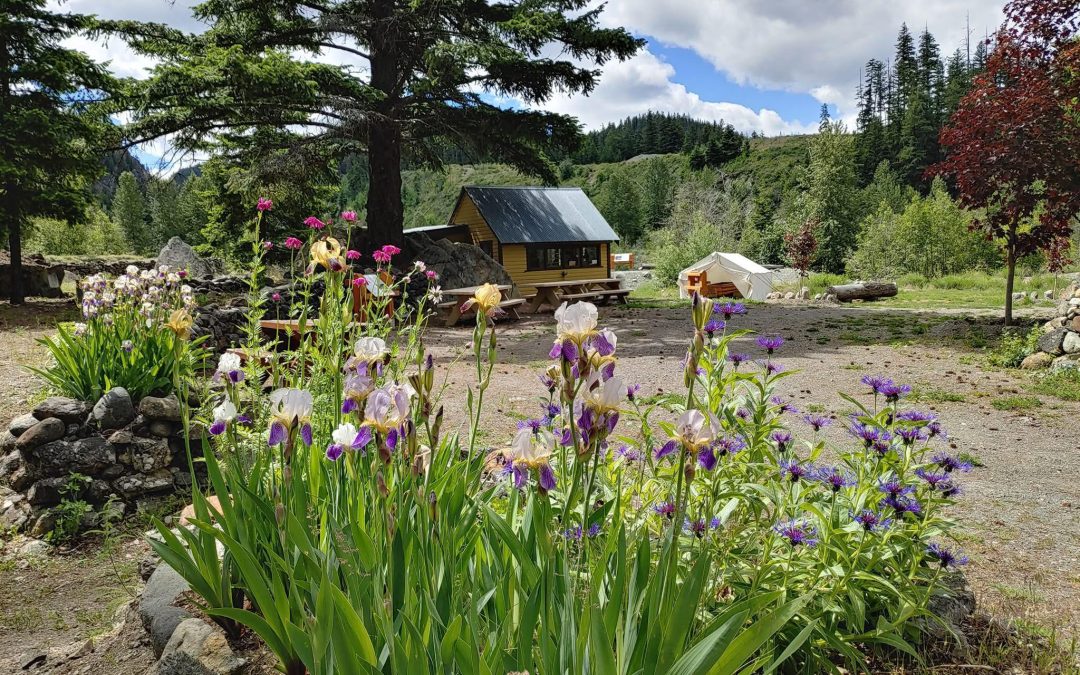
This position provides hands-on experience in caring for outdoor environments, including lawns, walkways, trails, roadside areas, and landscaped features such as trees, shrubs, flowerbeds, and the Bralorne Labyrinth.
The Groundskeeper will also support the BRVCA Team Lead by identifying and reporting issues and assisting with routine maintenance and repairs to ensure that community assets remain in excellent condition.
Beyond groundskeeping, the student will serve as an ambassador for the community by welcoming residents and visitors to the historic Boultbee Memorial Community Church.
This includes supporting public access, conducting Heritage Interpretive Tours, and sharing the Church’s rich history and cultural significance as a valued local heritage asset.
As a public-facing representative, the Groundskeeper will also provide visitors with helpful information, including maps, local regulations, directions, and guidance on accommodations and area highlights.
In doing so, the student contributes to a positive, engaging, and educational experience for everyone exploring the Bridge River Valley.
What skills will the participant develop during this job
Adaptability – The ability to achieve or adjust goals and behaviours when expected or unexpected change occurs, by planning, staying focused, persisting, and overcoming setbacks. For example, one uses this skill to change work plans to meet new deadlines, learn how to work with new tools and improve skills through feedback.
Collaboration – The ability to contribute and support others to achieve a common goal. For example, at work we use this skill to provide meaningful support to team members while completing a project.
Communication – The ability to receive, understand, consider, and share information and ideas through speaking, listening, and interacting with others. For example, we use this skill to listen to instructions, serve customers and discuss ideas.
Creativity and Innovation – The ability to imagine, develop, express, encourage, and apply ideas in ways that are novel, unexpected, or challenge existing methods and norms. For example, we use this skill to discover better ways of doing things, develop new products, and deliver services in a new way.
Digital Skills – The ability to use digital technology and tools to find, manage, apply, create, and share information and content. For example, we use this skill to create spreadsheets, safely use social media, and securely make online purchases.
Numeracy – The ability to find, understand, use, and report mathematical information presented through words, numbers, symbols, and graphics. For example, we use this skill to perform calculations, manage budgets, analyze, and model data and make estimations.
Problem-solving – The ability to identify, analyze, propose solutions, and make decisions. Problem solving helps you to address issues, monitor success, and learn from the experience. For example, we use this skill to make hiring decisions, select courses of action and troubleshoot technical failures.
Technical skills – The ability to develop capabilities that relate to the practical or mechanical side of an activity, the application of a set of technical processes and its required know-how.
Adaptability – The ability to achieve or adjust goals and behaviours when expected or unexpected change occurs, by planning, staying focused, persisting, and overcoming setbacks. For example, one uses this skill to change work plans to meet new deadlines, learn how to work with new tools and improve skills through feedback.
Collaboration – The ability to contribute and support others to achieve a common goal. For example, at work we use this skill to provide meaningful support to team members while completing a project.
Communication – The ability to receive, understand, consider, and share information and ideas through speaking, listening, and interacting with others. For example, we use this skill to listen to instructions, serve customers and discuss ideas.
Creativity and Innovation – The ability to imagine, develop, express, encourage, and apply ideas in ways that are novel, unexpected, or challenge existing methods and norms. For example, we use this skill to discover better ways of doing things, develop new products, and deliver services in a new way.
Digital Skills – The ability to use digital technology and tools to find, manage, apply, create, and share information and content. For example, we use this skill to create spreadsheets, safely use social media, and securely make online purchases.
Numeracy – The ability to find, understand, use, and report mathematical information presented through words, numbers, symbols, and graphics. For example, we use this skill to perform calculations, manage budgets, analyze, and model data and make estimations.
Problem-solving – The ability to identify, analyze, propose solutions, and make decisions. Problem solving helps you to address issues, monitor success, and learn from the experience. For example, we use this skill to make hiring decisions, select courses of action and troubleshoot technical failures.
Technical skills – The ability to develop capabilities that relate to the practical or mechanical side of an activity, the application of a set of technical processes and its required know-how.
